WordPress has been around for a long time, but the questions businesses are asking about it are changing. A few years ago, most conversations were around design, hosting and how easy a website was to update. In 2026, we’re hearing a lot more about AI, security, ownership, search visibility, website maintenance and whether businesses still need to think about their website once it has been built.
These are some of the most common questions we’re getting from clients right now, and our view on where WordPress sits in 2026.
Is WordPress still a good choice for businesses in 2026?
Absolutely. WordPress is still one of the most widely used website platforms in the world and remains the most commonly requested platform we work with. We’re also seeing marketing managers and business owners become much more educated about the platforms their websites are built on. Increasingly, clients are coming to us already knowing that they want WordPress.
One of the biggest reasons is flexibility. Businesses don’t want to be locked into an agency’s proprietary CMS where they need that same agency every time they want something changed. With WordPress, there is a huge ecosystem of designers, developers and agencies that can work with the platform. If a business wants to move providers in the future, they can. That flexibility and portability are still some of WordPress’s biggest strengths.
Is AI replacing WordPress developers?
We’re definitely seeing AI change the website market, but it’s not impacting every part of the market in the same way. Where we’re seeing the biggest disruption is at the DIY end. Someone who might previously have built their own website using Wix or another website builder now has more options, with AI platforms that can generate websites from prompts. That market is changing quickly.
Where we’re not seeing the same disruption is with professionally designed and developed business websites. AI-generated websites are improving, but there is still a noticeable gap between something automatically generated and something properly designed around a business, its users and its goals. The layouts can still feel generic, the design decisions aren’t always right and the end result can often have that homemade feel.
We also don’t necessarily think professional developers are going to be replaced by AI. If anything, AI is expanding what our developers can do. We’re starting to build more custom functionality, integrations and software-based solutions because development is becoming faster and more accessible. We’re having businesses come to us saying things like, “We wish our CRM could do this,” and increasingly we can build those solutions. So rather than replacing developers, AI is broadening the type of work we can deliver.
What are businesses actually asking about AI?
Interestingly, clients generally aren’t coming to us asking for an “AI website”. The more common question is, “Will AI be able to find my business?”
Businesses want to know whether their products, services and information are appearing when someone searches through ChatGPT or other AI platforms. It’s really an extension of the conversations businesses have been having about Google for years. Previously the question was, “Will I show up on Google?” Now it is also becoming, “Will ChatGPT know who we are?”
And that makes the website even more important. AI systems need to get their information from somewhere. If your website doesn’t clearly explain what your business does, who you work with, where you operate and what services you provide, then information about your business may be coming from third-party directories or other sources that you don’t control. That information can also be outdated or inaccurate.
Businesses should be making sure the information on their own website is current, specific and clear. People are also asking AI increasingly specific questions, so businesses need to clearly communicate the individual products, services, locations and problems they solve. You want to control the narrative around your own business.
Do websites still matter if people are searching through AI?
Absolutely. If anything, the rise of AI search makes having accurate information on your website even more important.
Your website remains one of the few places online where you have complete control over how your business is represented. If the information on your site is vague, outdated or missing entirely, other sources may fill that gap. That could be directories, old business listings, third-party websites or information published years ago.
The better and more specific the information you provide, the easier it is for both traditional search engines and AI platforms to understand your business. The way people search may be changing, but businesses still need a strong source of truth online. For most businesses, that source should be their website.
Should businesses be worried about WordPress security?
Yes and no. If your WordPress website is sitting there without regular updates, maintenance or monitoring, there is absolutely a reason to be concerned. There are constantly new security threats, and AI is making it easier for attackers to identify vulnerabilities and scale attacks.
But AI is also being used on the other side. Software companies, security providers and developers are using automation and AI to detect vulnerabilities and strengthen systems as well. It is becoming a bit of an AI-versus-AI environment.
The important thing for business owners is not to panic about WordPress security. It is to make sure someone is actively looking after the website. WordPress core, plugins, themes, backups and security monitoring all need to be managed. A well-maintained WordPress website is very different from a website that hasn’t been touched in two years.
Should I just turn on automatic updates?
Automatic updates can be useful, but they are not a maintenance strategy. For someone managing their own website, we would be cautious about relying on automatic updates alone. Not every plugin will necessarily update automatically, and updates can occasionally create compatibility issues or break functionality.
As an agency, we use automation as part of the maintenance process, but we still manually review websites, check that updates have completed properly and deal with anything that needs attention. That distinction is important.
The value of maintenance isn’t somebody manually clicking an update button every time a plugin releases a new version. It is making sure the website stays current, checking that updates have completed properly, identifying anything that hasn’t updated and stepping in when something goes wrong. Automatic updates are a tool. They aren’t a maintenance strategy.
Is Elementor still a good choice in 2026?
We think Elementor is fantastic, and we’re actually seeing more clients specifically ask for WordPress and Elementor together. Its capabilities have grown substantially.
One of the biggest advantages is that it gives clients much more control over their own website. If a client wants to update content, change an image or make basic changes themselves, they can. It also makes ongoing support much more cost-effective.
Our designers and developers can make changes quickly, which means small website updates don’t necessarily become large development jobs. We’ve seen businesses using other CMS platforms where something as simple as updating a logo can turn into a $600 development task. That is difficult to justify.
Elementor gives us the ability to make changes quickly, and it gives clients the ability to manage more of the website themselves. It also means we can get new pages, campaigns and updates to market much faster.
What about the complaints about Elementor?
There are definitely people who don’t like Elementor, but our view has always been that it comes down to how you use it. A badly built Elementor website can absolutely be slow, difficult to manage and frustrating to work with, but that doesn’t necessarily mean Elementor is the problem.
Often, the website simply wasn’t set up properly or wasn’t built to a good standard in the first place. It’s the same with almost any business tool. A great accounting platform doesn’t automatically give you good bookkeeping. The tool matters, but how it is used matters more.
We find Elementor to be an excellent platform when it is implemented properly.
Do I actually own my website?
This is something we’re getting asked much more frequently. With Clickk, once a project has been paid for in full, the client owns the website and the intellectual property we have created for the project. They are not locked into us. If they decide to move to another provider, the website can move with them.
The distinction businesses need to understand is the difference between owning the website and owning every piece of third-party software used to run it. For example, premium plugins such as Elementor operate on subscription licences. When a website is hosted and maintained by us, those licences can form part of that service.
If a client decides to move to another provider, they may need to purchase their own licences or arrange them through the new provider. That doesn’t mean they don’t own the website. It simply means some of the software powering the website operates under an ongoing licence, just like many other pieces of business software.
For us, that freedom is one of the big advantages of WordPress. Clients should be able to take their website somewhere else if they want to.
How often should a business rebuild its website?
There isn’t one answer that works for every business. It depends heavily on what the website does and what the business is trying to achieve.
If you are an established business that gets most of its work through referrals and your website is really just an online brochure, you might get five to ten years out of a website. If the information is accurate, the design still represents the business well and the website isn’t actively hurting you, there may not be a strong commercial reason to constantly rebuild it.
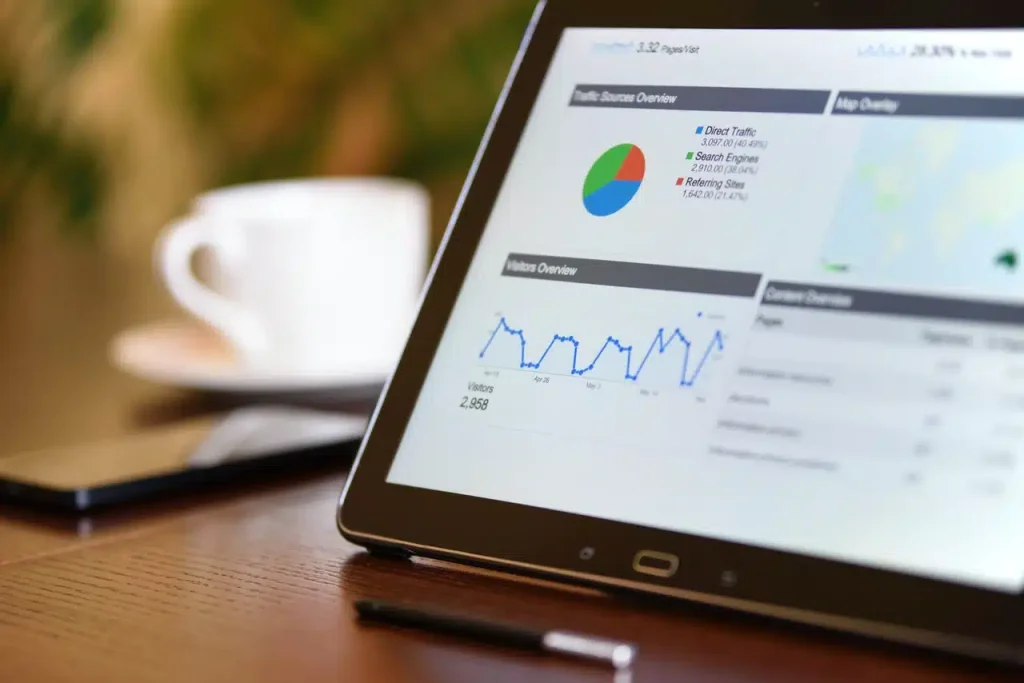
For a business actively trying to grow, it is different. If your website is generating leads, supporting sales, connecting with systems or forming part of your marketing strategy, it should be constantly reviewed. You should be looking at website traffic, enquiries, conversion rates, what users are doing, where they are dropping off and what competitors are doing. You should also be making sure the information on the website actually reflects the business today.
For those businesses, the website should almost be treated like bookkeeping or another ongoing business function. You don’t do your books once and never look at them again. Your website should be treated the same way.
Is a website ever really finished?
For a lot of businesses, not anymore. That doesn’t mean you need to redesign your website every six months. It means you should be constantly asking whether the website is still doing what the business needs it to do.
Businesses change, services change, teams change, technology changes, competitors change, and the way customers search for businesses is changing as well. A website should evolve with those changes.
The days of building a website, publishing it and ignoring it for the next five years are disappearing, particularly for businesses that are actively trying to grow.
So, is WordPress still relevant in 2026?
We think it is. WordPress itself is evolving, but the bigger change is what businesses expect from their websites.
A website is no longer just a digital brochure. It can be connected to marketing, sales, CRM systems, automation, analytics, internal processes and increasingly AI discovery. At the same time, businesses want more ownership, more flexibility and more control over the technology they use. WordPress continues to fit that requirement extremely well.
The platform is only one part of the equation though. What matters is how the website has been designed, how it has been built, how well it is maintained and whether it continues to support the business behind it.
For businesses that rely on their website to generate leads, support customers or drive growth, it should be treated as an active part of the business, not a one-off project.