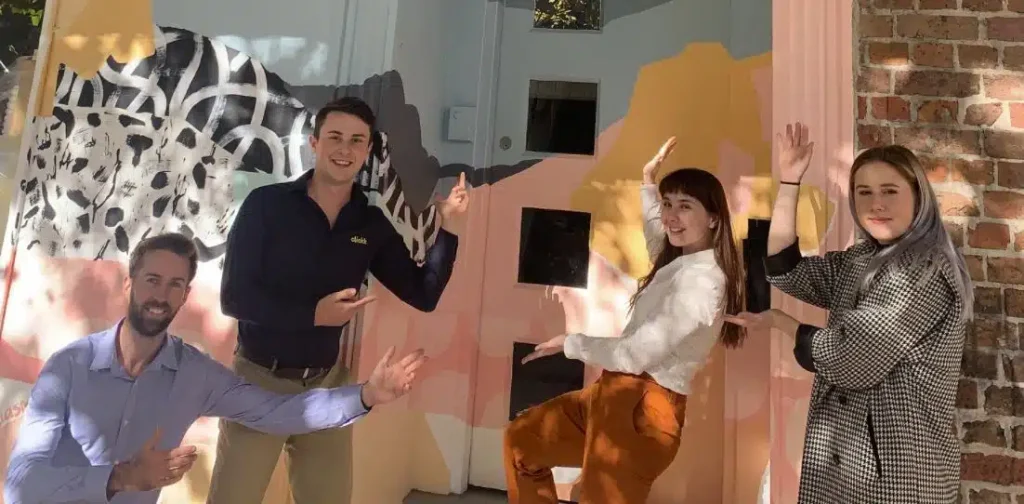
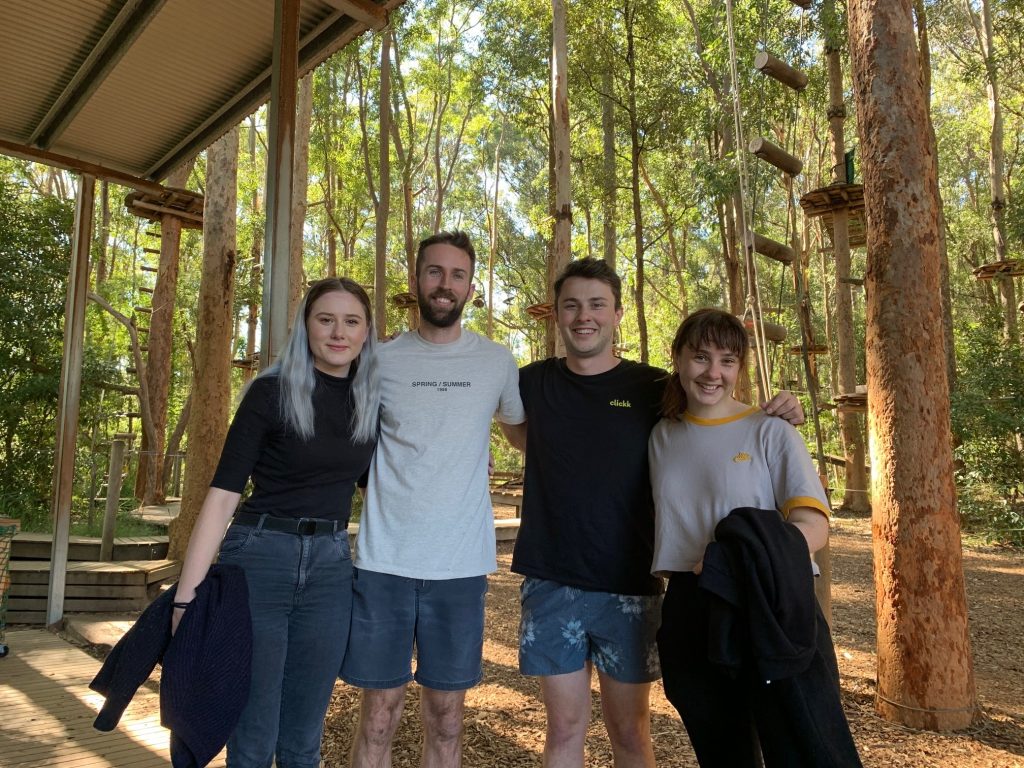
Last week, Jemma and I (Daniel) took a trip down to Sydney for something a little different. We weren’t there for web design or tech innovation stuff; we were there to watch the one and only Chris Do Present.
For those that don’t know Chris Do, he’s an Emmy award-winning designer, the founder of The Futur, and a man on a mission to teach a billion people how to make a living doing what they love. He’s known for his work with major global brands including Nike, Microsoft, Sony, Google, NFL, Adobe, Starbucks, Xbox, Riot Games, and Honda
The seminar was titled “Unblanding Yourself,” and honestly? It was the wake-up call we need especially in a world that’s heading towards bland, generic AI generated content.
The “Blanding” Epidemic
Chris started with a hard truth: AI is causing us to live in a sea of sameness.
Think about the last 10 websites you’ve visited, there’s a high chance, they’re all very similar in design. Similar layouts, similar fonts, similar colours, similar photos and messaging.
Chris refers to this “Blanding.” In an era where AI can generate a “competent” website or a “good” blog post in seconds, being competent is no longer enough. AI is accelerating mediocrity. If your brand looks, acts, and talks like everyone else, you’ve become a commodity. And commodities are easily replaced by the cheapest bidder or the newest algorithm.
AI-Proofing: From Searchable to Known
One of the most interesting parts of the talk was discussing AEO (Answer Engine Optimisation). We’ve all heard of SEO, but the game is changing. With AI tools like ChatGPT and Google’s AI Overviews, the search engine isn’t just showing websites anymore; it’s giving concise answers.
If your content lack originality or a unique perspective, it will simply summarise it, and the user will never even click your site. Chris’s advice to AI-proof your business? Have a Point of View (POV).
AI can help discover authorities, but it can’t create them. Chris used the example of himself, and being found by a client who search ChatGPT to find a thought leader in branding. To survive the shift from SEO to AEO, you have to be more than just “searchable.” You have to be known. You need a reputation that exists outside of a keyword.
The 5 R’s: Why Branding is Actually Math
A common misconception is that branding is just “aesthetic fluff”; choosing pretty colors and a nice logo. Chris dismantled that pretty quickly by linking branding directly to ROI through the 5 R’s:
- Reputation: What people actually believe about you, your company and product or service.
- Relationships: Who trusts you (and who you trust).
- Revenue: What people are willing to pay you and where you’re positioned in the market
- Retention: Who stays with you over the long haul.
- Renewal: The repeat business and referrals that keep the lights on.
In short: Brand is commercial leverage. A strong brand allows you to charge more, work with better clients, and spend less on acquiring new ones.
Key Takeaway: Different is Better than Better
This was a completely different perspective that was a bit of a lightbulb moment for myself. Most businesses spend all their time trying to be better than their competitors. 10% faster, 5% cheaper, slightly better customer service.
But being “better” is incremental and exhausting. Being different is strategic.
Chris introduced us to the 3% Rule. You don’t need to reinvent the wheel or build a spaceship. You just need to change 3%. Find inspiration from a completely different industry, maybe a high-end fashion label or a local coffee roaster, and apply a tiny sliver of their “vibe” to your own world. That slight contrast is often enough to make your brand stand out.
Applying “Unblanding” to Web Design
So, how are we bringing this back to our web design process? We’ve already started rethinking our approach:
- Inversion Thinking: Instead of asking “What makes a good website?”, we’re asking “How do we make sure this brand doesn’t blend in?” We’re looking at the “safe” choices (the empty positivity, the trendy layouts) and actively looking for ways to create a strong point of difference.
- The Courage to be Disliked: This is a tough one, but it’s a critical point. If your website tries to appeal to everyone, it ends up appealing to no one. We want to help our clients find their “enemy”, not necessarily a person, but a concept or a norm they are against. Whether it’s “against slow service” or “against corporate jargon,” standing for something makes you magnetic to the right people.
- Beauty as Shorthand for Quality: Chris reminded us that 50% of the human brain processes visual information. We often try to “prove” quality through testimonials and data, but aesthetic signals quality before the proof even exists. We’re doubling down on high-end finishes, unique typography, and textures that make a digital space feel “premium.”
Final Thoughts
We walked away from the Sydney seminar feeling inspired, slightly challenged, and ready to shake things up. The goal for us (and for our clients) isn’t just to build a functional website. It’s to build a meaningfully different digital presence.
As Chris says: If no one disagrees with you, you are invisible. It’s time to stop playing it safe. It’s time to unbland.