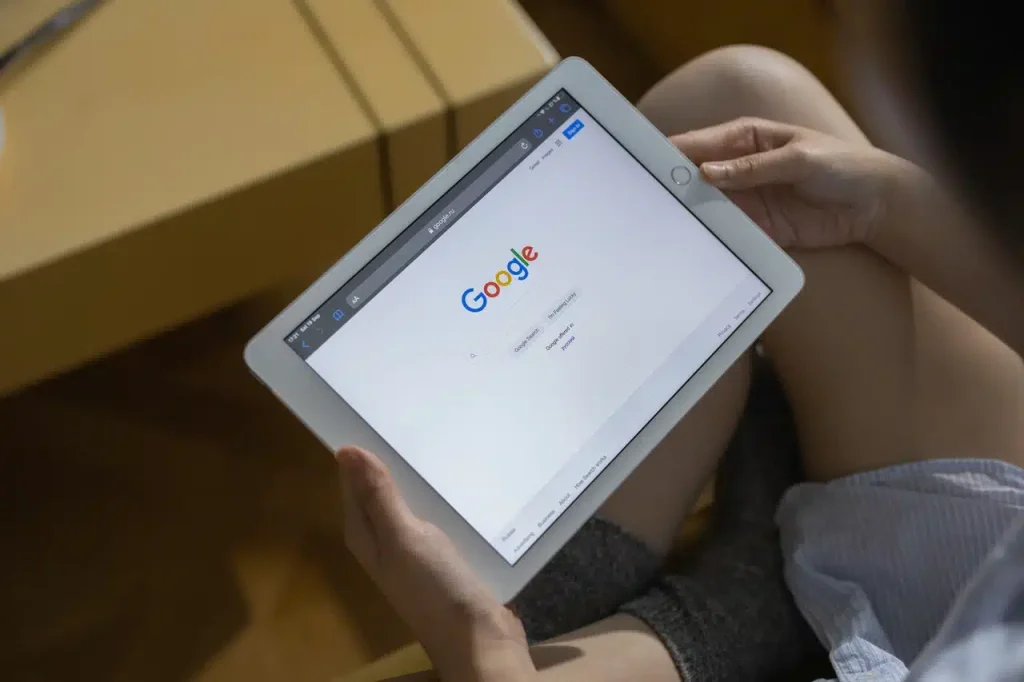
If your website traffic moved in late March or early April (up, down, or sideways) you’re not alone, and you’re not imagining things. Google finished rolling out its first major algorithm update of 2026 on 8 April, and a lot of business owners were left staring at their analytics wondering what on earth happened.
We noticed changes across our own site and across the client sites we monitor. Here’s our plain-language take on what a core update actually is, what we observed this time around, and what we think you should do about it.
What Is a Google Core Update, Really?
The simplest way we explain it to clients: Google updates its algorithm to make sure the best results show up first. That’s why everyone uses Google and not Yahoo. (Search for an elephant on Yahoo and you might get a photo of a dog.)
To do that job well, Google constantly improves how it understands and ranks the billions of pages on the internet. A core update is one of the bigger recalibrations: a significant shift in how the algorithm weighs up content, relevance, and authority across the entire web.
Because there are millions of websites and it’s impossible to cover every base, these updates sometimes benefit sites, sometimes penalise them, and sometimes do both at once to different pages on the same domain. It’s not personal. It’s not always fair. But it is the environment we all operate in.
What Actually Happened in March 2026
March was unusually busy for Google. Three separate updates landed in quick succession:
- A February Discover update finished rolling out on 27 February. It was the first time Google had ever released a core update specifically targeting the Google Discover feed.
- A spam update launched and completed in under 20 hours on 24–25 March, the shortest spam update on record.
- The March 2026 Core Update began on 27 March and finished on 8 April after just over 12 days, making it the second-fastest broad core update in two years.
The spam update running immediately before the core update wasn’t likely a coincidence. Think of it as Google clearing the table before recalibrating everything, removing clear policy violations first, then reassessing broader content quality across the web.
Google described it as “a regular update designed to better surface relevant, satisfying content for searchers from all types of sites.” No companion blog post. No new specific targets. Just a recalibration that touched every industry, region, and site type on the internet.
What We Observed Across Our Client Sites
We monitor rankings and traffic across around 25 of our larger client websites. Over the 45 days following the February update, we saw a slight decrease in traffic compared to the same period the previous year.
Our honest read? We don’t think that’s primarily an SEO story. While Australian consumer spending technically increased in March 2026, the data shows it was driven almost entirely by essential cost-of-living increases (fuel, energy, food) rather than discretionary spending. Consumer confidence sits at its fourth-lowest level since 1973. Households are making pragmatic budget choices and scaling back on services.
The industries where we noticed it most in our client base were fashion, personal items, and hospitality, all discretionary categories. Most of our clients are service businesses, and when consumers and companies tighten their belts, non-essential services are the first thing to go. That shows up in enquiry volumes before it ever shows up clearly in rankings data.
For some sites that improved over the same period, we think that had more to do with seasonal patterns than algorithm changes. These were businesses that traditionally perform well at this time of year.
We also noticed our own rankings dip for some target keywords: ‘web design Sydney‘, ‘web design Central Coast’, and ‘web design Maitland‘. That was frustrating to see, but in honesty we think it comes down to increasing competition and the reality that maintaining rankings isn’t as easy as it used to be. It’s reinforced something we already knew: standard location pages aren’t enough anymore. You need to be actively building brand presence through content, social media, and genuine visibility in the areas you’re targeting.
What Google Is Actually Rewarding Right Now
Based on post-rollout analysis across the SEO community, and what we’ve observed ourselves, the pattern is consistent: Google is getting better at identifying content that adds something genuinely new versus content that just rephrases what already ranks.
Sites that publish at volume across topics outside their expertise, especially using AI to spin or rewrite other people’s articles. These are the consistent losers. Sites with deep topical authority, original perspective, and real experience behind the content are holding firm or improving.
We want to be clear on the AI content question, because there’s a lot of noise around it: we don’t think Google can or should penalise all AI-generated content. There’s genuinely great AI-assisted content out there that adds real value. What will get caught, maybe not immediately but as the algorithm advances, is content that uses AI to churn out articles with no original insight, no human expertise, and nothing that couldn’t have been assembled by reading the top ten search results.
Technical performance continues to matter too. Sites with slow load times (specifically an LCP (Largest Contentful Paint) above 3 seconds) appear to have lost more ground than faster competitors. Google is increasingly assessing performance at a domain level, which means a slow template can pull down your entire site, not just individual pages.
Our Approach and Why We Think It Holds Up
We’ve always operated on a white hat, long-term strategy. No keyword stuffing. No shortcuts. No spinning other people’s content. We believe Google’s foundation is built on the idea that you can search for anything and find high-quality, useful content. Our job is is to contribute to that, not exploit it.
We see SEO less as a technical exercise and more like a PR function: giving a wider audience access to genuinely useful information, which in turn creates exposure. When you approach it that way, backlinks tend to grow organically rather than needing to be manufactured.
A real example: about a year ago we published an article answering one of the most common questions we get: the average cost of web design for small businesses in Australia. We wrote it because we were already answering the question constantly, and we wanted the answer to exist somewhere useful on the internet. It took about six months before it started ranking in searches and appearing in Google’s AI Overview. Once it did, we started noticing backlinks appearing from other websites: accounting firms, business advisors, other agencies. Nobody asked them to link to it. They linked to it because it answered a question their clients were asking.
That article didn’t generate direct leads. But it moved our rankings for keywords like Web Design Newcastle, Web Design Sydney, and Web Design Central Coast. Those rankings led to real business. That’s the long game. It doesn’t produce quick wins, but it produces results that last and that don’t collapse every time Google updates its algorithm.
What You Should Actually Do Right Now
Everyone says don’t panic. We agree. But we’d add: don’t be passive either.
If your rankings have dropped and it’s affecting enquiries, that requires attention now, not in three months. The first thing we’d do is review Google’s own core update documentation at developers.google.com/search/docs/appearance/core-updates and try to pinpoint why specific pages may have been affected. If you’ve been operating ethically and using white hat strategies, adjustments can often be made relatively quickly. If you’ve been relying on shortcuts, the honest answer is that there’s not much to do except start doing things properly from this point forward.
A few practical starting points:
- Don’t measure success by rankings alone. Rankings are a useful gauge, but leads and enquiries are what actually matter. If you rank number one for a keyword searched 2,000 times a month, that’s only valuable if it’s generating business. Track both, but focus on the one that pays the bills.
- Check Search Console with date awareness. Compare traffic before and after 27 March. Any drops starting on 24–25 March may be from the spam update, not the core update. Be precise about what you’re diagnosing.
- Start answering your clients’ questions. The simplest version of a content strategy is getting on your blog and writing genuine answers to the questions you get asked every week. Not keyword-optimised filler. Actual useful answers. That’s where organic backlinks and long-term authority come from.
- Don’t expect overnight recovery. Content quality improvements are typically recognised at the next major core update, expected around June or July 2026. Start now so you’re positioned for that cycle.
The Part Nobody Wants to Hear
A lot of business owners, and honestly a lot of SEO practitioners, are more focused on tricks than strategy, even if they don’t realise it, because tricks have become the norm.
SEO is heading in one clear direction. More personal relevance, more original perspective, more demonstrated expertise. AI Overviews are changing how traffic flows from search results. Competition is increasing because more businesses are investing in it. The fundamentals aren’t changing, but the bar is rising.
Here’s what we’ve learned after years of doing this: we could teach you everything you need to know about SEO in a day. The theory isn’t the hard part. The hard part is actually doing it. The discipline of spending four to eight hours a week on it, consistently, over months and years. That’s where almost everyone falls short. Business owners and agencies alike.
Ignore the hype. Stop researching and start implementing. Produce content that genuinely helps people. Build something that contributes to the internet rather than clutters it. Do that consistently and your site will hold up through algorithm updates, not because you gamed the system, but because you built something worth ranking.
Want us to review how your site performed through the March 2026 update? Get in touch and we’ll pull the data together and give you a straight answer.