Australian businesses are feeling the pressure. With rising operating costs, economic uncertainty and consumers becoming increasingly cautious about their spending, generating new business isn’t as straightforward as it once was.
The latest economic figures reflect this uncertainty. NAB’s September 2026 Business Survey reported business confidence at its lowest level in years, while Australian Bureau of Statistics data showed household spending remained flat in August.
For businesses operating in the business-to-consumer (B2C) market, these challenges can be particularly noticeable. Customers are taking longer to make purchasing decisions, comparing more providers and becoming increasingly price-conscious.
Understandably, many businesses are responding by reducing expenses, cutting marketing budgets or choosing cheaper alternatives when investing in their digital presence.
While reducing costs might provide short-term relief, cutting investment in the areas responsible for generating new business can sometimes make an already difficult situation worse.
Before reducing your marketing budget or spending more money attracting visitors, there’s an important question worth asking: is your existing website doing enough to convert potential customers into enquiries?
Why Your Website Matters More in a Slower Economy
When consumer confidence is high and customers are spending freely, businesses can sometimes overlook an underperforming website. Enquiries continue coming in, and there may be less pressure to examine how effectively the website contributes to revenue.
In a tighter market, however, every opportunity becomes more valuable. Potential customers are likely to be researching their options carefully, comparing prices, evaluating credibility and looking for reassurance before committing to a purchase.
Your website plays an important role in that decision-making process. It’s often where potential customers form their first impression of your business, explore your services and decide whether to make contact. If your website is outdated, difficult to navigate or fails to communicate your value, customers may simply move on to a competitor.
The solution isn’t necessarily to spend more money on marketing. Sometimes, improving the performance of your existing website can provide better value than increasing advertising expenditure.
10 Signs Your Website Could Be Costing You Customers
1. Your Website Looks Outdated
First impressions matter. An outdated website can create doubts about the professionalism and credibility of your business, even when your products or services are excellent. Website design trends, customer expectations and technology continually evolve. A website that looked modern five years ago may no longer represent your business effectively.
2. Your Website Doesn’t Perform Well on Mobile
For many businesses, mobile devices account for a substantial share of website traffic. If visitors need to zoom in, struggle with navigation or encounter poorly formatted content, they’re less likely to continue browsing. A mobile-friendly website needs to be designed around usability, not simply resized to fit a smaller screen.
3. Your Website Is Slow to Load
Website speed influences both user experience and search engine performance. Slow-loading pages create unnecessary frustration, particularly for mobile visitors. Large images, outdated plugins, excessive scripts and poor hosting configurations can all contribute to performance issues. Improving loading speeds can help reduce friction and provide visitors with a better experience.
4. Your Calls to Action Aren’t Clear
When someone visits your website, is it immediately obvious what they should do next? Whether it’s requesting a quote, making a booking or calling your business, the next step should be simple. Poorly positioned buttons, confusing forms and unclear messaging can prevent otherwise interested customers from making contact.
5. Your Website Isn’t Generating Enough Enquiries
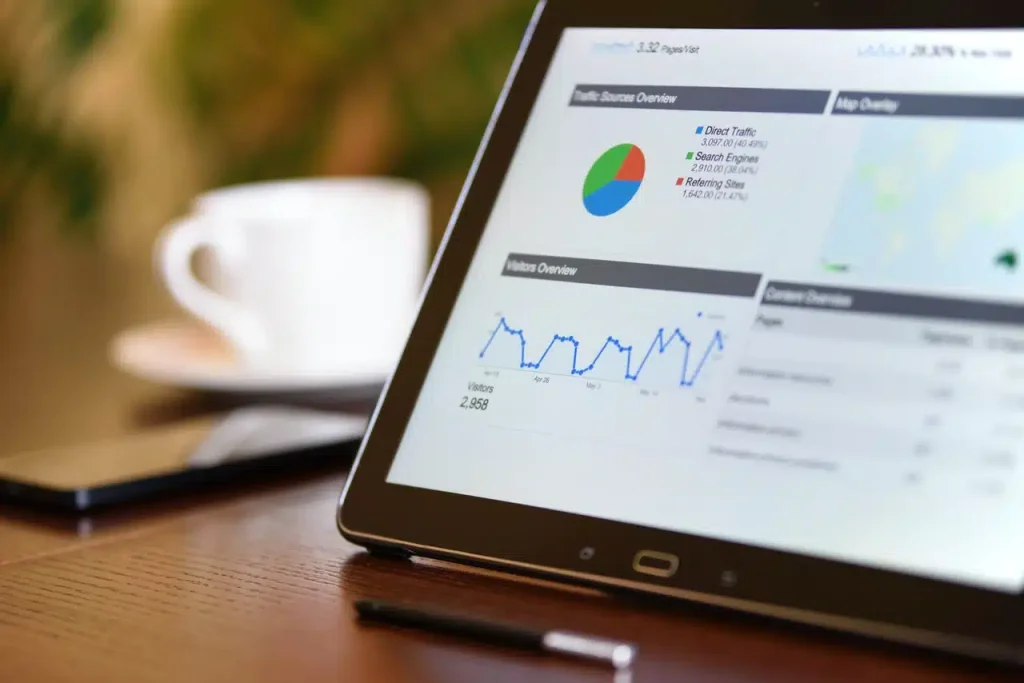
If your website receives consistent traffic but generates very few enquiries, there may be a conversion problem. However, it’s important to understand whether the issue is genuinely conversion-related or whether you’re attracting the wrong audience. Reviewing traffic sources, visitor behaviour and conversion data can help identify where potential customers are dropping off.
6. Your Search Engine Rankings Are Declining
A reduction in website enquiries isn’t always caused by poor design. Declining search rankings, increased competition or changes in how people search for your services can reduce the number of visitors reaching your website. Identifying whether traffic has declined is an important first step before deciding what improvements are required.
7. Your Website Doesn’t Reflect Your Current Business
Businesses evolve, but their websites don’t always keep up. You might offer new services, target different customers, employ more staff or have significantly improved your capabilities since your website was originally developed. If your website still reflects the business you were several years ago, potential customers may not understand everything you can offer.
8. Your Website Doesn’t Establish Trust
In a competitive market, customers need reasons to choose your business over another provider. Testimonials, client reviews, case studies, project examples and clear information about your experience all help establish credibility. Without these elements, customers may struggle to differentiate your business from cheaper competitors.
9. You’ve Chosen the Cheapest Website Option
When budgets are tight, choosing the cheapest website provider can be tempting. However, a lower upfront price doesn’t necessarily represent better value. A website that lacks strategic planning, proper development, search engine optimisation or ongoing support may cost more over time through lost opportunities and additional development work. The important consideration isn’t simply what a website costs to build, but what value it provides to your business.
10. You Treat Your Website as a Set-and-Forget Investment
One of the most common misconceptions we encounter is that a website is something you build once and leave untouched for years. In reality, a website should evolve alongside your business. Content needs updating, software requires maintenance, customer expectations change and new opportunities emerge. Without ongoing attention, even a professionally developed website can gradually become less effective.
Before Rebuilding Your Website, Understand What’s Actually Wrong
When a website isn’t performing, it’s easy to assume that a complete redesign is the answer. At Clickk, our approach is to first understand what’s causing the problem. Has organic traffic declined? Have conversion rates dropped? Are search rankings falling? Is the website outdated, or has the market changed?
These are different problems that require different solutions. For example, if traffic has declined but conversion rates remain consistent, the priority may be improving search visibility rather than rebuilding the website.
Alternatively, if visitor numbers remain steady but enquiries are falling, the issue could relate to usability, messaging or changes in customer behaviour. Sometimes a complete rebuild is justified. In other cases, improving existing pages, updating content or refining conversion pathways can deliver meaningful improvements without starting again.
The objective should always be to identify the problem before investing in the solution.
Small Website Improvements Can Make a Big Difference
Consider a business receiving 1,000 website visitors each month. At a conversion rate of 2%, that website generates approximately 20 enquiries. If improvements to the website increase its conversion rate to 3%, the same traffic generates 30 enquiries.
That’s a 50% increase in potential enquiries without spending additional money attracting visitors. Of course, conversion improvements aren’t guaranteed, and enquiry quality matters just as much as quantity. However, the example illustrates why understanding website performance is so important.
For businesses looking to maximise their marketing budgets, improvements to conversion rates can be particularly valuable.
Your Website Should Evolve With Your Business
In a challenging economy, businesses naturally become more cautious about where they invest their money. However, putting off necessary website improvements or continuously choosing the cheapest option can create longer-term problems.
Your website is more than an online brochure. It’s a platform for communicating your value, building credibility and generating opportunities. Like any business asset, it requires attention to remain effective.
At Clickk, we’ve worked on more than 400 website projects across a broad range of industries. One thing we’ve learned is that successful websites aren’t simply the ones that look the best. They’re the ones that support genuine business objectives and continue evolving as those objectives change.
Is Your Website Working Hard Enough?
If your business is experiencing fewer enquiries, declining website traffic or reduced conversions, understanding the cause is the first step towards improving performance. Whether your website needs a few targeted improvements or a complete rebuild, making informed decisions is particularly important when budgets are tight.
Request a Website Review
Not sure whether your website is performing as well as it should? Get in touch with Clickk to discuss your existing website, identify potential issues and explore opportunities for improvement.